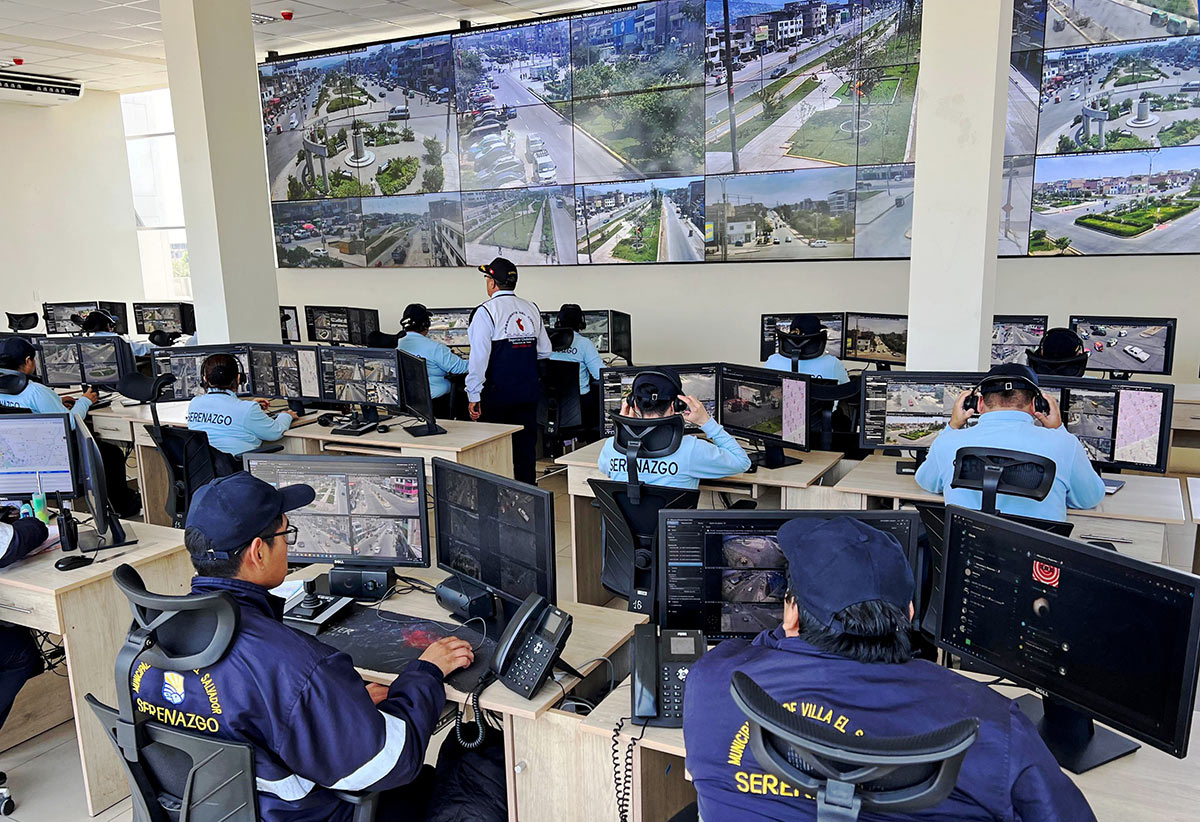
Airports operate in a state of constant change. Passenger volumes rise and fall throughout the day, movement patterns shift quickly and even minor disruptions can ripple across terminals and curbside areas.
At the same time, airport teams are expected to improve safety, efficiency and passenger experience using the infrastructure and staffing models already in place. Here's how BriefCam video analytics can help.
By adding intelligence to existing camera networks, airport teams gain real-time awareness of what’s happening across their environment, along with the ability to analyze patterns over time. Instead of relying on assumptions or periodic audits, decisions can be based on actual movement, usage and behavior.
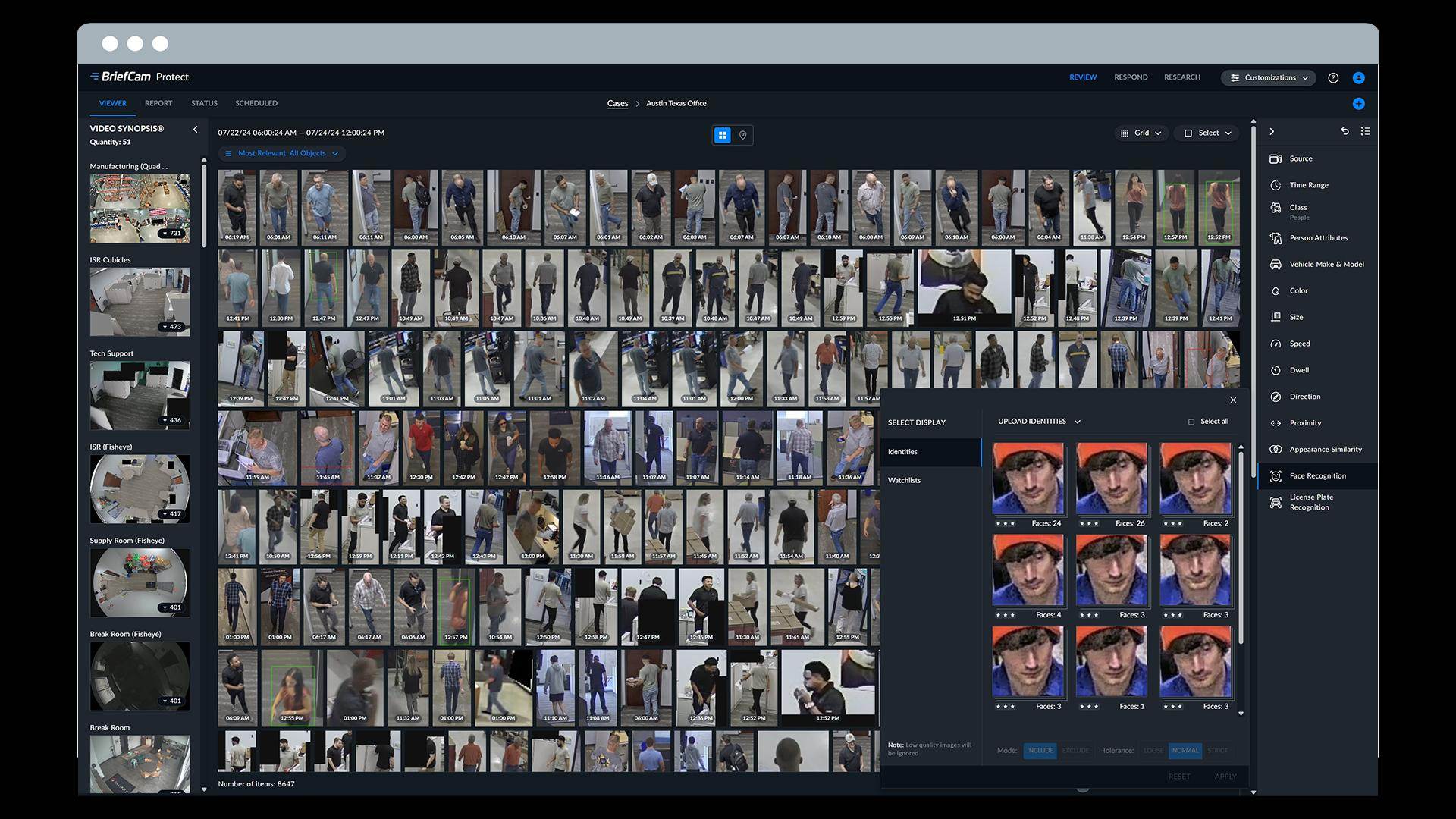
BriefCam, our advanced video analytics platform, helps you shift from visibility to intelligence by utilizing the video you already have to support daily operations, incident response and long-term planning. BriefCam is structured around three core modules that can be used to meet different airport needs:
Review
The Review module accelerates investigations and validation by allowing teams to search video based on attributes such as appearance, movement, direction, dwell time and more. Instead of manually reviewing hours of footage, operators can quickly surface relevant moments to reduce investigation time and operational disruption.
Respond
The Respond module enables real-time, rule-based alerts so you can increase your situational awareness for conditions like growing crowds and queues, unauthorized access to sensitive areas and dwelling too long in terminal drop off and pick up areas. These alerts help teams intervene earlier and support proactive response while keeping human decision-making and established protocols firmly in place.
Research
The Research module aggregates video data over time to reveal trends in passenger flow, congestion and space usage. These insights support more informed decisions around staffing, layout changes, maintenance planning and future investments grounded in how the airport actually functions day to day.
BriefCam is available across multiple platform editions, but most of our airport customers gravitate toward Insights or Protect. These editions support larger, more complex deployments with access to all three modules.
So, how does BriefCam's core functionality help airports?
Improving passenger flow from curb to gate
Passenger congestion rarely starts in one place. It often builds incrementally—at curbside drop-off, parking entrances, terminal doors, check-in counters or security checkpoints—then compounds as travelers move through the airport. The challenge is identifying when and where that buildup begins early enough to act.
This is where real-time alerts play a critical role. Using Respond, airport teams can configure rule-based alerts tied to operational thresholds such as crowd density, queue length or prolonged dwell time in specific areas. When those thresholds are exceeded, teams are notified immediately, enabling intervention while conditions are still manageable.
Alerts help shift passenger flow management from reactive to proactive. Instead of discovering congestion after it becomes disruptive, teams can respond early by opening additional lanes, repositioning staff or adjusting passenger routing before queues become unsafe or impact timely performance.
Beyond real-time response, BriefCam also supports a deeper understanding of how congestion forms and resolves over time. Using Research, airports can analyze crowd movement, queue behavior and dwell patterns across different times of day, days of the week and seasonal peaks. This makes it possible to identify recurring bottlenecks and better understand congestion in specific areas.
These insights support more informed operational decisions. Staffing levels can be aligned with observed demand rather than fixed schedules. Signage can be updated based on actual passenger movement patterns. Temporary adjustments, such as reallocating personnel or modifying queue layouts, can be planned in advance for known peak periods.
From a financial standpoint, better visibility into passenger flow helps airports use resources more efficiently. By intervening earlier and planning based on real data, teams can reduce reliance on last-minute overtime, avoid unnecessary staffing surges and support compliance with safety expectations tied to crowding and capacity management.
Smarter parking and vehicle flow as an operational advantage
Parking and curbside areas are highly sensitive to changes in demand, with traffic patterns that can shift quickly throughout the day. Vehicle volumes fluctuate, routes overlap and even small disruptions can create backups that affect terminals, roadways and passenger access.
Using Research, airport teams can gain visibility into how vehicles move through parking garages and curbside zones. This module makes it possible to analyze vehicle flow and occupancy patterns over time and identify recurring congestion points, uneven utilization and inefficiencies at entrances, exits or pickup and drop-off areas.
These insights support more deliberate operational planning. Routing and signage can be adjusted based on how drivers actually navigate parking facilities. Access points can be evaluated for bottlenecks and known peak periods can be planned for using real data rather than assumptions.
When conditions shift unexpectedly, Respond supports timely intervention. Airports can configure alerts for scenarios such as congestion at access points or prolonged dwelling in pickup and drop-off zones, allowing teams to act before backups impact traffic flow or safety.
By improving visibility and response across parking and curbside operations, airports can keep vehicles moving more predictably, reduce downstream congestion and make better use of existing infrastructure—without expanding facilities or adding unnecessary complexity.
Enhancing safety and regulatory adherence across airport environments
Airport safety challenges vary significantly depending on location and activity. Managing crowd density in terminals, controlling access to restricted zones and monitoring secure operational areas such as runways and tarmacs all require different types of awareness, response and documentation.
Restricted areas, for example, introduce a different set of risks and regulatory requirements than passenger flow management. In Security Identification Display Areas (SIDA), Respond can be used to flag unauthorized access attempts or activity that falls outside expected patterns. These alerts reduce the need for constant manual monitoring and help teams focus attention on potential issues only when they occur.
Secure operational areas such as runways, tarmacs and perimeter boundaries also require rapid awareness when unexpected objects or individuals are detected. Analytics can surface anomalies in these environments in real time, supporting quick response to prevent safety risks from escalating into operational incidents.
Over time, Research helps airports strengthen safety and compliance by identifying recurring patterns and risk areas. By analyzing historical data—such as frequent access issues in specific zones—teams can make informed adjustments to procedures, layouts or even their Respond alert configurations to reduce future incidents.
Together, these capabilities support a shift from reactive enforcement to proactive safety management.
Faster investigations with less operational disruption
When incidents occur, airport teams need answers quickly. Traditional video review slows that process down, requiring staff to manually search across dozens or hundreds of cameras before they can piece together what happened.
Using Review, airport teams can streamline investigations by searching across video based on attributes such as appearance, movement, direction, dwell time or object presence. As a result, investigations can move forward with far less operational disruption. Incidents are validated more quickly, questions are resolved sooner and normal operations can resume without extended delays. This is especially important in large, multi-terminal airports, where prolonged investigations can affect multiple teams and the overall traveler experience.
By reducing the time and effort required to investigate incidents, Review helps airports use security and operations resources more efficiently while supporting timely decision-making without pulling staff away from day-to-day responsibilities.
For airport teams looking to get more value from the video systems they already have, video analytics provides a practical path forward. It turns everyday video into intelligence that supports safer operations, smoother passenger experiences and better outcomes across the airport.
Book a demo with us to learn how video analytics can support your operations.
In this article, we look at how BriefCam security software helps airport teams turn security footage into intelligence that supports safer operations, smoother passenger flow and more confident decision making.